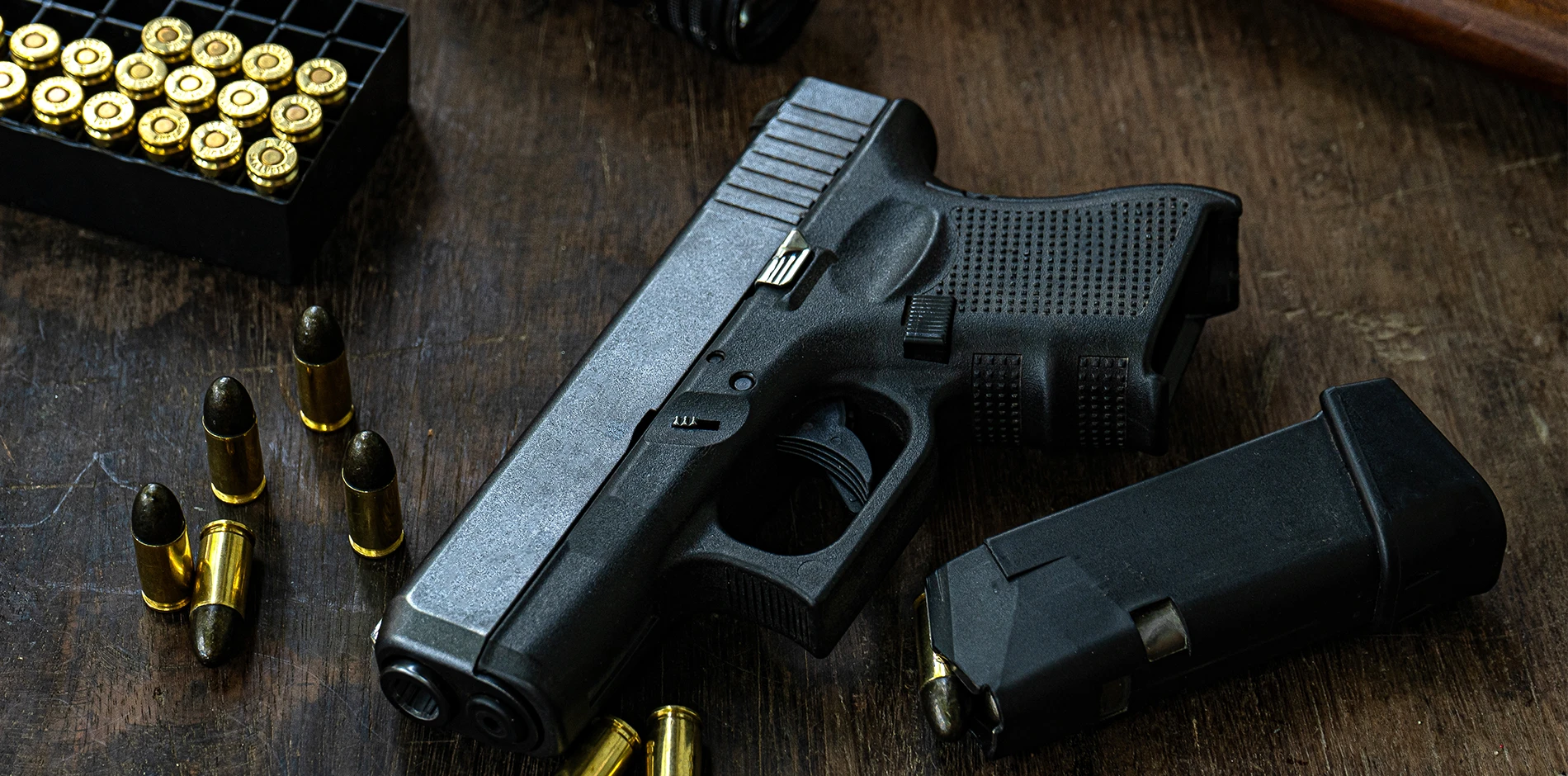
Lawyer for Carrying Concealed Weapons Charges in Dayton
Are you facing a carrying concealed weapons (CCW) charge in Ohio? Our Dayton CCW lawyers at Gounaris Abboud work to protect your rights, gun ownership, and future.
50+
Years Combined
Experience
95%
Success
Rate
400+
Google
Reviews
Experienced Dayton CCW Defense Attorneys on Your Side
Gounaris Abboud is a respected Ohio criminal defense firm with a proven record of defending clients against concealed-carry charges in Dayton and statewide. Our attorneys draw on decades of combined experience and deep knowledge of Ohio’s firearm laws to challenge the prosecution and protect our clients’ rights.
We’ve secured dismissals, reduced charges, and favorable outcomes in both misdemeanor and felony cases. Known for our personalized approach and aggressive advocacy, we are ready to fight for you whether the case involves alleged unlawful concealment, violating carry restrictions, or possessing a firearm in a prohibited location.
Our concealed weapon lawyers offer free consultations for anyone facing weapons charges in Dayton, Montgomery County, or anywhere in Ohio, and we understand how local court procedures affect the strategy we build for each client. Several law firms in the Dayton area handle criminal defense, but few bring the depth of experience with Ohio gun laws and weapons crimes that our team provides. If you are facing carrying a concealed weapon charges or related firearms charges, contact us today to discuss your case and your options.
Ohio’s Concealed Carry Laws: What Changed in 2022
Ohio legalized concealed carry in 2004 under H.B. 12, making it the 45th state to allow residents to carry a concealed handgun with a permit, and the state’s gun laws have continued to evolve since then. The most significant recent change came in 2022 when permitless carry went into effect, allowing qualifying Ohio residents to openly carry or carry a concealed handgun without obtaining a concealed carry license. However, permitless carry does not eliminate all legal requirements, and understanding exactly what the law prohibits is still important for anyone who carries a firearm in Ohio.
A concealed carry license remains valuable even under permitless carry because it enables reciprocity with other states and may help avoid misunderstandings during encounters with law enforcement officers in Ohio or while traveling. Applicants for a concealed carry license must complete a firearms safety training course and pass a criminal background check, and any prior criminal conviction or drug offense that makes someone a prohibited person will bar them from obtaining or keeping a license. Our concealed weapon lawyers help clients understand whether they qualify to carry under current Ohio law and what steps to take if their license has been suspended or revoked.
Ohio Revised Code § 2923.12 still governs what constitutes a criminal offense for carrying a concealed weapon, and the statute applies to far more situations than many people realize. A concealed carry license or permitless carry status does not eliminate the risk of being charged with a weapons crime if you carry in a prohibited location, handle the weapon improperly, or are found with a loaded handgun while being a prohibited person. Facing any gun offense in Dayton requires a criminal defense lawyer who knows how law enforcement officers apply these statutes in Montgomery County courts.
Ohio Laws on Carrying a Concealed Weapon
Under R.C. 2923.12, it is illegal to knowingly carry or have concealed on your person or readily at hand any of the following:
- A deadly weapon other than a handgun
- A handgun (other than dangerous ordnance)
- Dangerous ordnance
Dangerous Ordnance and Prohibited Weapons Under Ohio Law
Ohio Revised Code § 2923.11 defines dangerous ordnance broadly to include automatic firearms, a sawed-off firearm, a firearm muffler or silencer, a zip gun, a ballistic knife, explosive substances including an incendiary device, military explosive, liquid oxygen blasting explosives, and other explosive substance and device categories that most people would not typically associate with everyday weapons charges. Possessing, carrying, or concealing any item that falls within this definition carries more serious criminal charges than a standard concealed weapon offense, often reaching fourth-degree or third-degree felony levels. A concealed weapon lawyer who understands these definitions can sometimes argue that an item does not meet the statutory definition of dangerous ordnance, which can result in a significant reduction in charges.
A defaced firearm, which is a firearm with an altered or removed serial number, is also treated differently under Ohio law and carries its own set of penalties separate from a basic carrying a concealed weapon charge. Similarly, improperly handling firearms in a motor vehicle is a separate offense under Ohio law that law enforcement officers frequently charge alongside other weapons charges following a traffic stop. Understanding which specific statute applies to the facts of your case is one of the first things our criminal defense lawyers analyze when building a defense strategy.
When law enforcement officers discover what they believe to be dangerous ordnance, the investigation often involves additional state and federal agencies, and the penalties increase substantially compared to other weapons crimes. Federal laws may also apply when firearms cross state lines or when prohibited persons are found in possession of certain classes of weapons, adding a layer of federal exposure to what might otherwise be a state-level criminal charge. Our attorneys handle both state and federal weapons charges and advise clients on the full scope of the legal consequences they face from the moment they contact our firm.
Potential Penalties Under R.C. 2923.12
Penalties depend on the facts (e.g., prior record, firearm condition, location). Offense levels are set in R.C. 2923.12(F); sentencing ranges and fine caps are in R.C. 2929.14 and 2929.18.
- Misdemeanor of the first degree (M1): up to 180 days in jail; up to $1,000 fine (baseline for many violations).
- Fourth-degree felony (F4): 6–18 months; up to $5,000 fine (e.g., prior CCW/violent-offense conviction; loaded firearm or ammo ready; dangerous ordnance).
- Third-degree felony (F3): 9–36 months; up to $10,000 fine (e.g., offense committed aboard an aircraft).
Note: Some unrelated “high-tier” F3 offenses in Ohio carry 12–60 months. Standard F3 sentencing for CCW is 9–36 months.
Prohibited Persons and Firearms Disabilities
A prohibited person under Ohio and federal law is someone who is legally barred from possessing firearms, and illegal possession of a concealed weapon by a prohibited person carries far more serious consequences than a standard carrying a concealed weapon charge. Prior convictions for violent crime, domestic violence, certain drug offense categories, and commitments to a mental institution all create firearms disabilities under Ohio Revised Code and federal laws that prevent a person from possessing a loaded weapon or any firearm. Criminal defense lawyers handling these cases must assess both state and federal laws to give clients an accurate picture of what they are up against.
Even a first-degree misdemeanor conviction for a weapons crime can sometimes trigger firearms disabilities depending on the specific charge and the defendant’s prior record, making it important to fight any weapons charges aggressively rather than treating a misdemeanor as something minor. Federal laws impose lifetime firearms disabilities for felony offenses, and any firearm conviction at the felony level means that even legally possessing a concealed firearm afterward becomes a federal crime. Our concealed weapon lawyers work to avoid convictions that would trigger these lasting disabilities and protect our clients’ right to bear arms going forward.
A criminal background check following a criminal conviction for a gun offense will reveal that disability to any firearms dealer, employer, or licensing authority that conducts a background check in the future. This can jeopardize professional licenses in fields like law enforcement, healthcare, and education, and it can follow a person through every future interaction with law enforcement. Our criminal defense lawyers treat these long-term consequences as seriously as the immediate penalties when building a defense strategy for any weapons charges case.
Where Carrying Is Still Illegal (Even with a License)
Having a concealed handgun license — or being a qualifying adult — does not allow carry everywhere. Ohio law lists prohibited places in R.C. 2923.126(B) and cross-references other statutes. Common examples include:
- Police stations, sheriff’s offices, and Highway Patrol facilities (R.C. 2923.126(B)(1))
- Certain state institutions (e.g., specific mental health or developmental disability facilities) (R.C. 2923.126(B)(2))
- School safety zones (R.C. 2923.122)
- Courthouses/rooms with courtrooms (R.C. 2923.123)
- Class D liquor permit premises, subject to limited statutory exceptions (R.C. 2923.121; 2923.126(B)(4))
- College/university premises (with narrow vehicle/board-authorized exceptions) (R.C. 2923.126(B)(5))
- Places of worship unless specifically permitted (R.C. 2923.126(B)(6))
- Certain government buildings/facilities and any place prohibited by federal law
Always verify posted signs and review the statute’s cross-references before carrying.
Motor Vehicle Rules for Concealed Carry in Ohio
Carrying a concealed handgun in a motor vehicle creates its own set of rules under Ohio law, and violations during traffic stops are among the most common sources of weapons charges in the Dayton area. A concealed carry license holder who is stopped while carrying a loaded handgun in a motor vehicle must comply with specific conduct rules, and failure to follow those rules can result in a first-degree misdemeanor charge even when the person is otherwise legally authorized to carry. Law enforcement officers routinely arrest drivers in Montgomery County who fail to properly disclose a concealed weapon during a traffic stop.
Ohio law also governs where a concealed weapon may be stored in a motor vehicle and whether the firearm may be loaded while in the vehicle, and these rules apply differently depending on whether the person has a concealed handgun license or is relying on permitless carry. Improperly handling firearms in a motor vehicle is a separate offense under Ohio Revised Code that carries its own penalties and is frequently charged alongside a carrying a concealed weapon charge following a stop. Our criminal defense lawyers analyze the full set of facts from any vehicle stop to identify whether the charges are supported by the evidence and whether law enforcement officers followed proper procedures.
A loaded handgun in a motor vehicle also raises questions about whether the weapon was concealed within the meaning of the statute, whether it was in plain sight, and whether the driver had actual knowledge of its presence in the vehicle, all of which can affect whether charges hold up in court. Unlawful possession claims that arise from motor vehicle stops often depend heavily on the credibility of law enforcement accounts and whether any search of the vehicle was lawfully conducted. Our attorneys challenge the basis for the stop, the search, and the arrest in these cases whenever the facts support doing so.
Notification and Conduct Rules During a Stop
The old “promptly notify” rule was changed by SB 215. If you are a licensee and carrying during a stop, you must disclose before or at the time the officer asks whether you are carrying; keep your hands in plain sight; do not touch the handgun; and follow lawful orders. Officers may issue lawful orders to anyone, licensed or not.
CCW Charges and the Impact on Your Future
Weapons charges can have serious consequences that extend well beyond the immediate criminal penalties, affecting employment, professional licenses, housing, and the right to bear arms for years after a case is resolved. A firearm conviction at the felony level creates lasting barriers that touch nearly every part of a person’s life, and even a first-degree misdemeanor weapons charge can affect certain careers and professional licenses in Ohio. Ohio residents who are convicted of carrying a concealed weapon face these long-term consequences in addition to jail time, fines, and the possibility of losing their concealed carry license permanently.
Felony offenses involving weapons crimes can also result in fifth-degree felony charges or higher, depending on prior record and circumstances, each carrying up to five years of prison exposure at the upper levels of the felony sentencing structure. The collateral consequences of a weapons conviction can be as damaging as the sentence itself, particularly for Ohio residents who work in fields that require a clean criminal background check or who hold a concealed carry permit or firearms dealer license that would be revoked upon conviction. Fighting weapons charges with the help of an experienced criminal defense lawyer is the most effective way to protect both your immediate freedom and your long-term future.
Our criminal defense lawyers in Dayton understand that every gun offense case has unique facts, and the legal consequences that flow from a concealed weapon charge depend heavily on the type of weapon involved, the location of the offense, the defendant’s prior record, and whether the stop that led to the arrest was lawful in the first place. We approach every weapons charges case with a defense strategy tailored to those specific facts and focused on achieving the best possible outcome for our clients. Contact our firm to schedule a free consultation and let us explain exactly what you are facing and what we can do to fight for you.
Defending Against Concealed Weapon Charges in Montgomery County
Montgomery County courts handle a significant volume of weapons charges each year, and having criminal defense lawyers who are familiar with local court procedures and how prosecutors in Dayton approach these cases is a real advantage for anyone facing a gun offense charge. Strong negotiation skills are particularly important in weapons charges cases because many of these matters can be resolved through plea agreements that result in reduced charges or alternative sentencing rather than a full trial. Our attorneys regularly negotiate with prosecutors in Montgomery County to pursue dismissals, charge reductions, and diversion where the facts and the client’s background support those outcomes.
Defenses to carrying a concealed weapon charges in Ohio often hinge on whether the weapon was truly concealed within the meaning of the statute, whether the initial stop or search was lawful, and whether the item actually qualifies as a deadly weapon or dangerous ordnance under Ohio Revised Code definitions. Unlawful possession charges also depend on whether the defendant had actual knowledge of the weapon’s presence, which is an element the prosecution must prove and one that our attorneys scrutinize carefully in every case we take on. A successful challenge to any one of these elements can result in a charge being dismissed or significantly reduced.
Our concealed weapon lawyers also evaluate whether any applicable statutory defense under R.C. 2923.12(H)-(K) applies to the specific facts of your case, since certain occupations, licensed activities, and circumstances create explicit legal defenses that the prosecution must overcome. Law enforcement officers sometimes arrest individuals who have a valid defense they are unaware of, and identifying and asserting those defenses early in the process can change the outcome of a case dramatically. We treat every weapons charges case in Montgomery County as though it may go to trial, which strengthens our position in every negotiation we undertake on our clients’ behalf.
Why Legal Representation Matters
CCW charges can have life-altering consequences — from jail and fines to firearm disabilities under state and federal law. An experienced criminal defense attorney can challenge the basis of the stop or search, evaluate whether an item was truly concealed, assert statutory defenses, and negotiate for reductions, diversion, or dismissal where appropriate.
How Our CCW Defense Lawyers Can Help You
Explain the Legal Process
Charges, exposure, options.
Investigate the Circumstances
Evidence, police conduct, witnesses.
Defend Your Rights in Court
Motions through trial.
Negotiate with Prosecutors
Reduced charges, diversion, alternative sentencing.
Challenge the Evidence
Inconsistencies, constitutional violations.
Pursue Dismissals or Reductions
Goal is to protect your freedom and record.
Why Gounaris Abboud Is the Right Choice for Weapons Charges
Extensive Experience
Over 50 years of combined criminal defense experience.
Personalized Defense
Personalized representation tailored to your situation.
Proven Results
Focus on results: dismissals, reduced charges, favorable verdicts.
FAQ Regarding Carrying
a Concealed Weapon
Yes. You can still face criminal charges for carrying in prohibited locations, failing to follow statutory rules during a stop, or concealing other deadly weapons or dangerous ordnance contrary to law. A concealed carry license does not allow firearms in school buildings, school safety zones, courthouses, or government buildings, and violating these location restrictions is a separate criminal offense regardless of whether the person is otherwise qualified to carry. Understanding what the law prohibits in each specific location is essential for anyone who carries a concealed handgun in Ohio.
Often yes. Certain convictions can create firearm disabilities under Ohio or federal law and may suspend or revoke an existing license. Consequences depend on the offense level and your record. A firearm conviction at the felony level can permanently eliminate your right to possess or carry any firearm under both Ohio and federal laws, and even a first-degree misdemeanor conviction can affect certain concealed carry privileges depending on the circumstances. Our attorneys advise clients on the full scope of firearms disabilities that could result from any criminal conviction so they can make fully informed decisions about their defense.
Potentially. Outcomes turn on the stop/search, what was allegedly concealed, your eligibility status, location-based restrictions, and other facts. We frequently challenge the prosecution’s proof and pursue reductions or dismissals where warranted. In many weapons charges cases, the legality of the initial stop or search by law enforcement officers is the central issue, and successfully challenging an unlawful stop can lead to evidence being suppressed and charges dismissed. Our concealed weapon lawyers evaluate every aspect of a case, from how the encounter began to how the weapon was found and described in the police report, to identify the strongest arguments available.
Yes. Even an M1 can carry jail time and lasting consequences. Early representation helps protect your rights and improve outcomes. Failing to notify police about a concealed weapon during a stop can lead to a first-degree misdemeanor charge on its own, and the consequences of that conviction can still affect professional licenses and a concealed carry license going forward. Criminal defense lawyers who handle weapons charges regularly know how to challenge these cases from the start and work toward a favorable outcome before the situation becomes harder to resolve.
Failing to notify a law enforcement officer that you are carrying a concealed handgun when required to do so can result in a first-degree misdemeanor charge, even if you are otherwise legally authorized to carry under Ohio law. Ohio law requires that if a law enforcement officer asks whether you are carrying during a stop, you must disclose before or at the time of the question, and you must keep your hands in plain sight and not touch the weapon. A conviction for this offense carries up to 180 days in jail and a fine of up to $1,000, and it can also affect your concealed handgun license and result in a criminal conviction on your record that affects future background checks.
Yes. Ohio law allows qualifying adults to openly carry a handgun in most locations without a concealed carry license, since the permitless carry law that took effect in June 2022 covers both concealed and open carry for eligible individuals. However, openly carrying a weapon is still prohibited in school safety zones, courthouses, police stations, and other locations where the law prohibits firearms regardless of whether they are concealed or visible. Ohio residents who openly carry should still be aware of these prohibited locations and understand that law enforcement officers can lawfully engage with anyone who is openly carrying a firearm in public.
Dangerous ordnance is a specific legal category defined in Ohio Revised Code § 2923.11 that includes automatic firearms, a sawed-off firearm, a zip gun, a ballistic knife, a firearm muffler, an incendiary device, military explosive, liquid oxygen blasting explosives, and other explosive substance types that the state treats as inherently more dangerous than standard handguns. Carrying or possessing dangerous ordnance without a specific statutory exception is a fourth-degree felony in Ohio, making it a much more serious offense than a standard carrying a concealed weapon charge. A concealed weapon lawyer who understands these definitions can sometimes argue that a particular item does not meet the legal definition of dangerous ordnance, which can result in a significant reduction in charges.
A criminal conviction for a weapons crime can result in the suspension or permanent revocation of an existing concealed carry license, and it can prevent a person from ever obtaining one in the future if the conviction creates a firearms disability under Ohio or federal law. Certain misdemeanor convictions, particularly those involving a violent crime or a domestic violence offense, also create federal firearms disabilities under the Gun Control Act that apply regardless of whether the conviction was at the state or federal level. Our criminal defense lawyers fight to avoid convictions that would result in these firearm disabilities and work toward outcomes that preserve our clients’ right to bear arms.
Improperly handling firearms in a motor vehicle is a separate offense under Ohio law that law enforcement officers frequently charge when they discover a weapon during a traffic stop, particularly when the firearm is accessible, loaded, or not stored properly under the applicable rules. The charge can be brought as a first-degree misdemeanor or higher depending on whether the driver had a concealed handgun license and whether the weapon was a loaded handgun or another type of deadly weapon. This offense is distinct from a standard carrying a concealed weapon charge, and it requires its own defense strategy based on the facts of the specific stop and encounter with law enforcement.
Ohio permits certain individuals to have criminal convictions sealed, but eligibility for sealing a weapons charge depends on the specific offense, the level of the conviction, and the individual’s overall criminal history. Felony offenses generally carry longer waiting periods before sealing becomes available, and certain serious felony convictions may never be eligible for sealing under Ohio law. The best way to protect your record is to fight the weapons charges before any conviction is entered, which is why contacting an experienced criminal defense lawyer as early as possible in the process gives you the best chance of avoiding a permanent mark on your record.
Fifth-degree felony charges in Ohio carry a sentencing range of six to twelve months in prison and fines of up to $2,500, and they arise in weapons crimes when specific aggravating factors are present that elevate the offense above a misdemeanor but do not reach the more serious fourth- or third-degree felony level. A fifth degree felony conviction still creates a permanent felony record with all of the associated consequences, including potential firearms disabilities, limitations on professional licenses, and barriers to employment and housing. Criminal defense lawyers handling these charges fight to reduce a fifth-degree felony to a misdemeanor or to achieve a dismissal whenever the facts of the case support doing so.
If you are stopped by law enforcement officers while carrying a concealed handgun, keep your hands visible, stay calm, and if asked whether you are carrying, answer honestly and immediately before the officer asks you to do anything else. Do not reach for or touch the weapon, and follow all lawful orders given by the officer even if you believe the stop is unjustified, since the best place to contest an unlawful stop is in court, not at the scene. After the encounter, contact a concealed weapon lawyer as soon as possible to discuss what happened, since anything that occurred during the stop could become evidence in a weapons charges case, and early legal advice helps protect your rights.
Additional Resources for CCW Defendants in Ohio
Disclaimer: This document is for informational purposes only and is not legal advice. Results depend on specific facts and law.
Montgomery County Clerk of Courts
Criminal division dockets and filings.
Dayton Police Department
Reports and public safety information.
Public Defender’s Office (Montgomery County)
Information on court-appointed counsel.