Every state, including Ohio, has an implied consent law. Officers use the Ohio implied consent law to help them enforce OVI laws. The state’s OVI and implied consent laws carry hefty penalties, including fines, imprisonment, and driver’s license suspension.
When you face an OVI and implied consent charge, you can raise defenses that may result in a dismissal, reduction, or acquittal. A Dayton OVI lawyer from Gounaris Abboud fights for your freedom, reputation, and driving privileges after the police stop you for drunk driving.
Refusing a Breathalyzer in Ohio Laws
Ohio imposes strict penalties on those caught operating a vehicle impaired (OVI), including mandatory time in jail or a driver intervention program, depending on your prior record. Contrary to popular belief, refusing a breathalyzer will not improve your situation.
First, prosecutors do not need to prove that your blood alcohol concentration (BAC) is over the legal limit to get an OVI conviction. ORC 4511.19 gives prosecutors several options for proving an OVI, including testimony from the arresting officer that your mental or physical faculties were affected by drugs or alcohol.
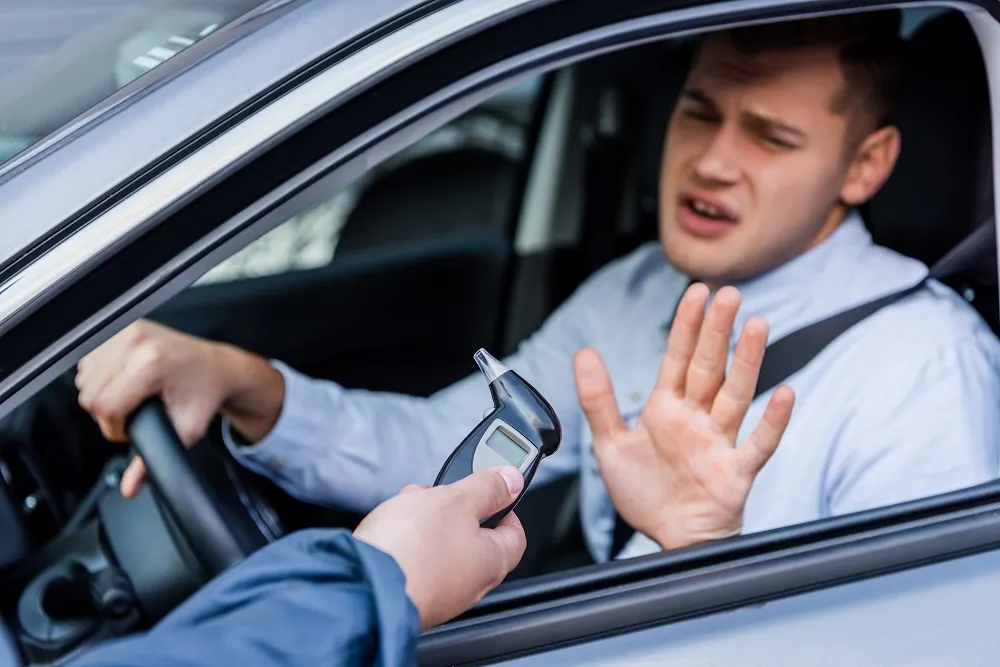
Second, Ohio law allows officers to use any reasonable means to obtain a chemical test, including getting a warrant for an involuntary blood draw. Thus, your refusal might not be able to block the police from obtaining test results.
What Does Implied Consent Mean?
In Ohio, you consent to a chemical test to measure your blood alcohol content (BAC) when asked by police. The test may be through samples of your breath, blood, urine, or oral fluids but the breathalyzer is the most common. If you refuse the breathalyzer in Ohio, the penalties can be severe.
“Implied consent” is a legal doctrine that says you consent to chemical testing as a condition of your driver’s license. A refusal to give a sample violates the terms of your license, allowing the state to suspend or terminate it under ORC 4511.191.
What Tests Does Implied Consent Apply To?
An officer may request a chemical sample anytime they have reasonable grounds to believe both of the following:
- You did something that justifies stopping your vehicle.
- You have a measurable amount of drugs or alcohol in your system.
In many cases, officers request a chemical test during the investigative phase of your traffic stop. This test is called a preliminary breath test (PBT). Implied consent laws do not apply to PBTs. You can choose whether to cooperate or decline without penalty.
If you cooperate, the officer may determine that the alcohol or drugs in your system are below the legal limit and let you go. The officer could also receive a test result that proves you violated Ohio law and use it as probable cause to arrest you.
Conversely, if you refuse, the officer may arrest you based on other observations, like a failed field sobriety test.
Once you have been arrested, the implied consent laws kick in. After this point, refusing breathalyzer in Ohio will have consequences. The arresting officer and agency can also request your blood, urine, or oral fluid. The oral fluid test is meant to determine whether you have used drugs recently.
When Can an Officer Request Me to Take a Breath Test?
Police can ask you to take a chemical test before or after you’ve been arrested for drunk driving.
If they ask you to take a preliminary breath test at the scene, you’re within your rights to refuse to blow. These devices are often inaccurate and are usually not administered by a specially trained law enforcement officer, so the results cannot be used as evidence.
After you have been arrested, the Ohio Revised Code OVI refusal law requires the officer to request — and requires you to provide — a test sample. You must be under arrest before the police can make this mandatory request.
[cta-banner title=”Need Help After Refusing the Test?” content=”Contact Gounaris Abboud to help you defend against the penalties for an OVI refusal in Ohio.” background=”https://www.gafirm.com/wp-content/uploads/2023/09/sd.jpg” button-title=”Schedule a Free Consultation”]Administrative License Suspension in Ohio for Refusal
Ohio allows two types of OVI-related driver’s license suspensions. Administrative license suspensions are ordered by the Ohio Bureau of Motor Vehicles (BMV). Judicial license suspensions are ordered by a court.
An implied consent suspension falls into the first category. It occurs when the police officer sends a report to the BMV stating that they took all the following steps:
- They arrested you for OVI
- After you were arrested, they asked you for a chemical sample
- They warned you of the consequences of refusing the test under ORC 4511.192
- You refused the test
The administrative license suspension happens automatically when the BMV receives the officer’s report.
The department does not need to wait for an order from a judge. Ohio state law gives the BMV the authority to immediately suspend your driver’s license for violating implied consent in driving under the influence arrests, regardless of whether you are convicted.
The immediate suspension is meant to accomplish the following goals:
- Enforce the terms and conditions of driver’s licenses
- Punish implied consent DUI violations by focusing on the refusal
- Keep recently arrested OVI offenders off the roads
The duration of an administrative license suspension depends on your prior record. Additionally, you can challenge the suspension.
Process to Appeal Implied Consent License Suspension

You can appeal a driver’s license suspension for an Ohio OVI refusal. However, the deadline for requesting an appeal happens early in the process.
What happens if you refuse a breathalyzer in Ohio? After your arrest for OVI, the police will typically book you into jail and hold you until they determine you are sober. Your initial appearance in court happens shortly afterward.
You must inform the court of your appeal at your initial appearance on your OVI charges or within 30 days afterward. The court sets a hearing where you and your OVI attorney present the reasons for the appeal and the evidence that the suspension is improper.
The court will usually not delay the suspension during the appeal process. Instead, you should expect the suspension to occur immediately and continue until you win your appeal, prevail in the underlying OVI case, or serve the entire suspension.
Grounds for Appeal
The basis for an appeal is limited to the following grounds:
- Did the police have reasonable grounds to stop you for OVI?
- Did the police arrest you for OVI?
- Did the officer ask you to take a chemical test after the arrest?
- Did the officer warn you of the consequences of refusing the test?
- Did you refuse the test?
If the answer to any one of these questions is “no”, the court must terminate the license suspension. In other words, you only need to prove the police missed one element of the OVI refusal process to end the suspension.
However, you bear the burden of proof in the appeal. This means you must persuade the judge by a preponderance of the evidence that the police failed to meet all the suspension process’s requirements.
A “preponderance of the evidence” means you must allege and prove the facts to show that it is more likely than not that your version of the story is correct. The evidence you may use to prove your case typically includes your testimony, the arresting officer’s testimony, eyewitness testimony, body cam video, and dash cam video.
What Are the Penalties If I Refuse to Blow?
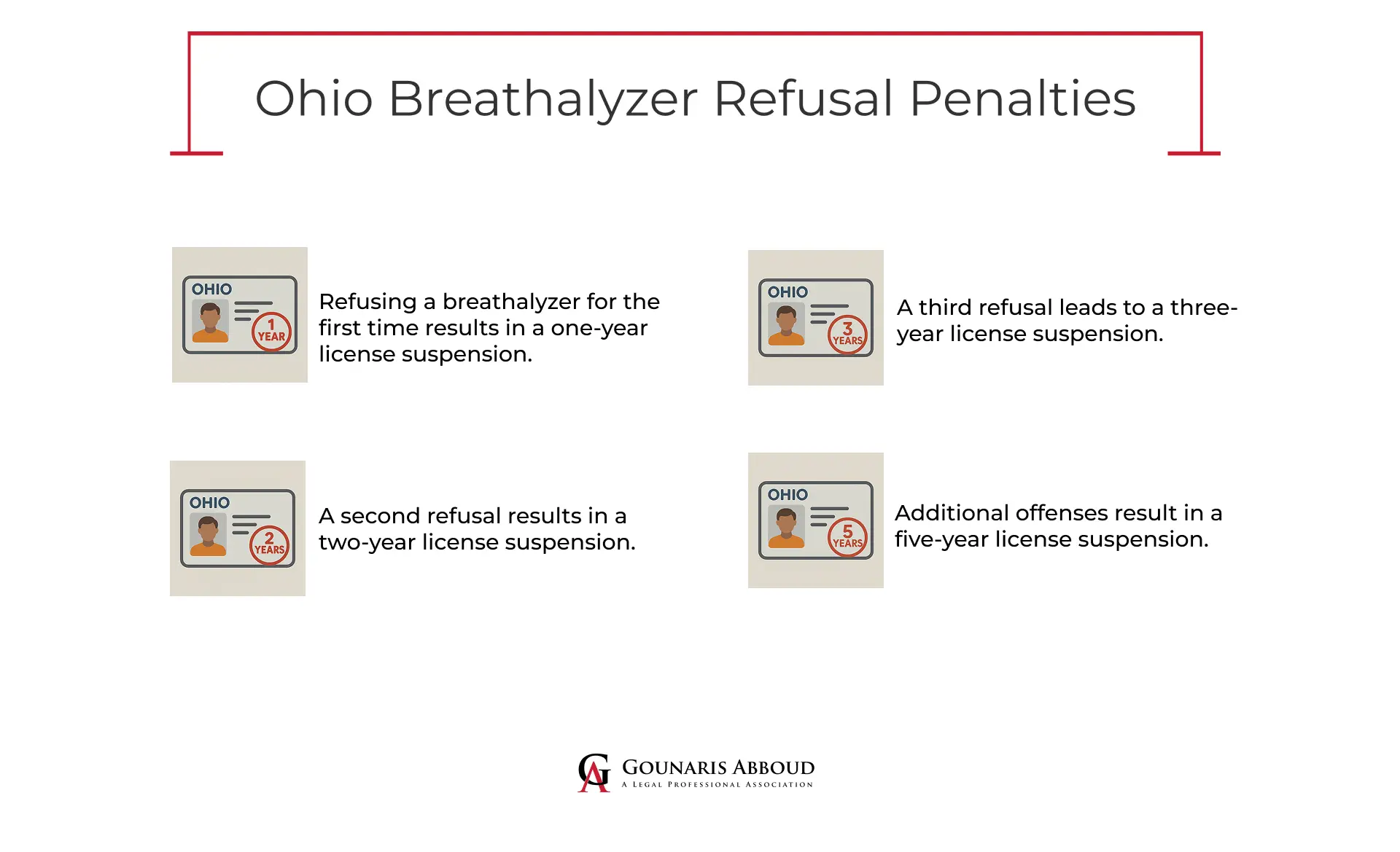
The first time you refuse a breathalyzer test, you’ll get a one-year driver’s license suspension. Per Ohio’s DUI laws, the penalties for OVI increase with subsequent offenses.
Therefore:
- A second refusal could lead to a two-year suspension of your driving privileges.
- License suspension for three years for a third refusal.
- A five-year suspension applies for more offenses.
However, you can request limited driving privileges, also called occupational driving privileges, that allow you to drive to work, school, or other specified destinations. You can only go to those destinations until the suspension ends or you petition for unlimited driving privileges.
What Happens to the DUI Charges Against Me?
What is implied consent charge? Refusal to blow is a separate administrative offense from drunk driving. The BMV imposes a license suspension regardless of the outcome of your DUI case. Moreover, even if you avoid a suspension, the court can still increase your punishment under an implied consent — enhancement only offense.
Are There Any Defenses to OVI Refusal to Blow?
The details vary according to your circumstances, but you may have grounds to fight the charges. The most common defense against a breathalyzer test result and refusal is that the police officer didn’t tell you your rights about the refusal to blow.
Another defense is that the officer lacked reasonable ground for the original traffic stop. Thus, you might argue you were stopped for your race instead of a driving violation.